
U6 Soccer Practice Plans: A Comprehensive Guide
U6 Practice Plans are available, encompassing 20 plans for younger athletes, focusing on ball mastery and dribbling with ease, as detailed in PDF resources.
What is U6 Soccer?
U6 soccer signifies the realm of play for boys and girls under six years old. It’s a foundational stage, prioritizing fun and introducing the beautiful game’s basics. At this age, the focus isn’t on complex tactics or competitive standings, but rather on fostering a love for the sport and developing fundamental motor skills.
Practice plans, often found as U6 soccer practice plans PDF resources, are designed to be engaging and age-appropriate. These plans emphasize constant movement – running, hopping, skipping, and turning – alongside maximizing each player’s individual ball touches. The goal is to build comfort and confidence with the ball at their feet, setting the stage for future development.
Becoming a U6 Soccer Coach: No Experience Necessary
Don’t worry if you have limited or no prior soccer experience! Organizations like AYSO offer unique, age-appropriate coach training programs specifically designed for beginners. These programs will equip you with the knowledge and tools needed to effectively guide young players.
You’ll discover how to structure practices, utilizing readily available U6 soccer practice plans PDF resources. These plans simplify session planning, offering drills and games focused on fundamental skill development. The emphasis is on creating a positive and encouraging environment where children can learn and grow, regardless of your initial skill level.
Core Principles of U6 Soccer Training
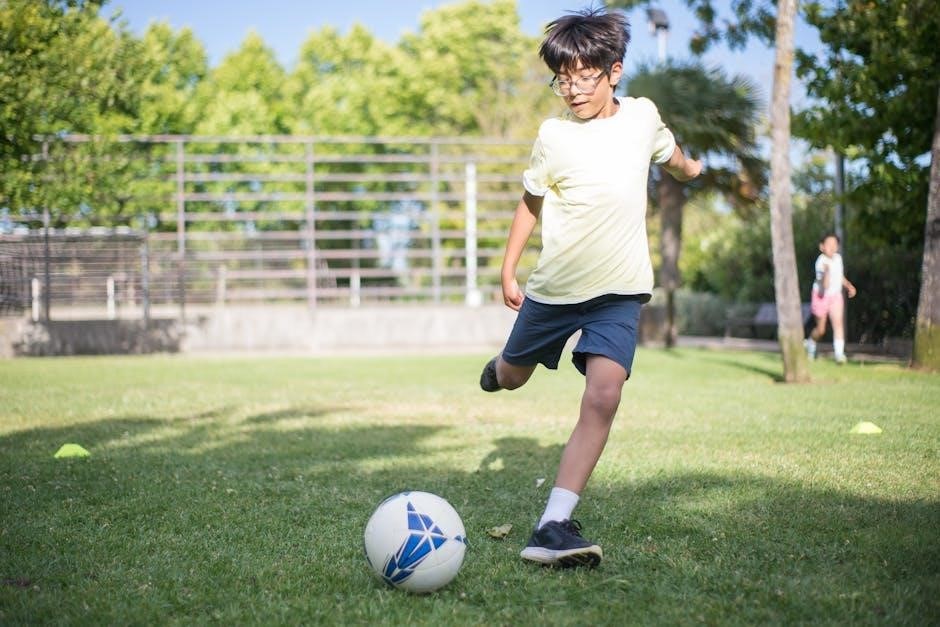
Soccer themes should center on comfort with the ball; U6 players require frequent touches to develop dribbling skills, as found in practice PDFs.
Focus on Motor Skill Development
U6 soccer training fundamentally prioritizes building a strong foundation of motor skills. These young players are still developing essential movements like running, hopping, skipping, and turning, all crucial for future soccer proficiency. Practice plans, often available as PDFs, should integrate these movements into every drill.
The goal isn’t complex tactics, but rather fostering comfort and coordination with their bodies. Frequent ball touches, combined with dynamic movements, help solidify these skills. Remember, at this age, maximizing movement is key, and practice PDFs will often highlight drills designed to achieve this constant activity.
Developing these foundational skills sets the stage for more advanced soccer concepts later on;
Maximizing Ball Touches
To become comfortable with the ball, U6 players require frequent interaction with it. Practice plans, often found as downloadable PDFs, should be structured to ensure each child has as many touches as possible during each session. This isn’t about complex skills, but about building a feel for the ball.
Drills should be designed so players aren’t waiting in lines; instead, everyone should be actively practicing simultaneously. The focus is on repetition and familiarity. PDFs detailing U6 drills emphasize this principle, offering exercises where players constantly dribble and manipulate the ball.
More touches build confidence and control, forming the basis for future skill development.
Keeping Players Moving Constantly
U6 soccer practice plans, readily available as PDFs, prioritize continuous movement. Young players thrive when engaged in dynamic activities, and standing around diminishes their focus and energy. Every drill should incorporate running, hopping, skipping, and turning – fundamental motor skills crucial for development.
These plans emphasize keeping the ball in play as much as possible, minimizing stoppages. The goal is to build stamina and agility while fostering a love for the game. PDFs often suggest drills where players are always dribbling, chasing, or reacting, ensuring constant activity.
Movement is key to skill acquisition at this age.
Essential U6 Soccer Drills
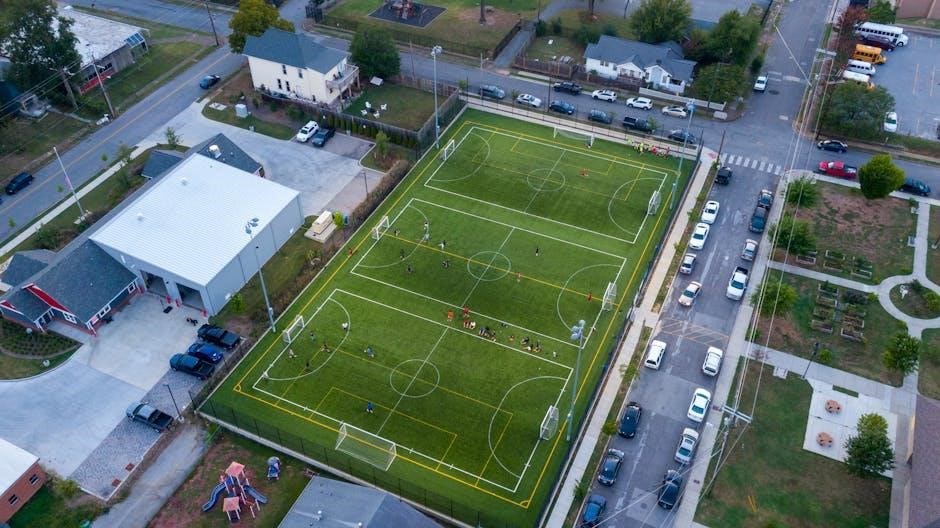
Essential drills, outlined in U6 soccer practice plans (PDFs), include the Dribbling Grid, Tag with the Ball, and Ball Mastery drills for skill development.
The Dribbling Grid Drill
The Dribbling Grid Drill, frequently found within U6 soccer practice plans (PDF resources), is a foundational exercise for young players. Set up a grid using cones, providing each athlete with a soccer ball. Players dribble freely within their designated square, focusing on keeping the ball close and under control.
Coaches should emphasize running, hopping, skipping, and turning within the grid to enhance motor skill development. This drill maximizes ball touches, a core principle of U6 training, ensuring constant movement and comfort on the ball. It’s a simple yet effective way to build confidence and coordination;
Tag with the Ball Drill
The “Tag with the Ball” drill, often detailed in U6 soccer practice plans (PDF resources), is a dynamic and engaging activity. Players each have a soccer ball and attempt to tag each other with their hands while simultaneously dribbling. A crucial rule: players cannot abandon their ball to make a tag!
This drill promotes dribbling skill, spatial awareness, and agility. Coaches should encourage players to keep their heads up and maintain control of the ball while navigating the playing area. It’s a fun way to combine physical activity with fundamental soccer techniques, fostering a playful learning environment.
Ball Mastery and Moves Drills
Ball mastery and moves drills, frequently found within U6 soccer practice plans (PDF resources), are central to developing a player’s comfort and control. These drills emphasize frequent ball touches, building a foundational relationship between the athlete and the soccer ball.
Typically, these sessions involve simple exercises like toe taps, sole rolls, and inside/outside foot touches. The focus isn’t on complex maneuvers, but on consistent, controlled contact. Demonstrating the skill first is key, followed by guided practice. These drills build confidence and prepare players for more advanced techniques later on.
Structuring a U6 Soccer Practice Session
Session planning, detailed in U6 practice plans (PDFs), organizes activities into 6-minute segments, utilizing a “Soccer Ready” cue for transitions and attention.
Session Planning Overview
U6 practice sessions benefit greatly from structured planning, readily available in comprehensive PDF resources. These plans typically emphasize a sequence: demonstration of skills, followed by focused practice. A key element is keeping activities brief and engaging, catering to the short attention spans of this age group.
Generally, a session should incorporate a warm-up, skill-based drills (like dribbling or ball mastery), and small-sided games. Remember to always demonstrate the skill first! The PDF resources often outline specific activity durations, typically around 6 minutes each, allowing for frequent changes and maintaining player interest. Effective session planning ensures maximized ball touches and constant movement.
“Soccer Ready” Cue for Attention
Establishing a consistent cue for gaining players’ attention is crucial at the U6 level. The “Soccer Ready” call-out, detailed within various U6 practice plans available as PDFs, serves as an effective method to transition between drills or adjust the pace of the session.
This simple phrase quickly signals to the young athletes to stop, listen, and refocus. Consistent use reinforces the association and minimizes wasted time. PDF resources highlight its importance in maintaining control and ensuring players are prepared for the next activity. It’s a vital tool for a smooth and productive practice environment.

Game Play for U6 Players
Soccer games will be small-sided, specifically 2v2 and 3v3 formats to two goals, as outlined in U6 practice plans found in PDF resources.
Small-Sided Games (2v2 & 3v3)
Small-sided games, like 2v2 and 3v3, are central to U6 development, providing maximized touches and active participation for every player. These games, detailed within U6 soccer practice plans available as PDF resources, emphasize fun and learning over strict tactical formations.
The focus isn’t on winning, but on individual skill development within a game context. Players experience frequent opportunities to dribble, pass, and shoot, fostering confidence and a love for the game. These formats also encourage quick decision-making and problem-solving skills, crucial at this age. PDF plans often suggest variations to keep the games engaging and challenging.
Managing Player Fatigue & Recovery
U6 players fatigue quickly but recover rapidly, a key consideration when structuring practice sessions. PDF-based U6 soccer practice plans emphasize short, frequent breaks and varied activities to maintain engagement and prevent exhaustion. Monitoring players for signs of tiredness – decreased effort, loss of focus – is crucial.
Recovery isn’t just about rest; it’s about active recovery. Light jogging or simple ball-handling exercises between drills can aid circulation and reduce muscle stiffness. PDF resources often suggest incorporating fun, low-intensity games to facilitate recovery while keeping players involved. Prioritizing hydration is also vital for optimal performance and swift recovery.
U6 Soccer Practice Duration & Timing
PDF practice plans suggest sequencing activities, with a “Soccer Ready” cue for transitions, and durations of approximately 6 minutes per activity for U6 players.
Activity Duration & Sequencing
U6 players possess short attention spans and recover quickly from fatigue, influencing practice structure. PDF resources emphasize brief, engaging activities, typically around six minutes each. Sequencing should follow a clear pattern: demonstration of the skill, followed by practice, and then a game-like application.
The “Soccer Ready” cue is vital for swiftly gaining attention and transitioning between drills. Constant movement – running, hopping, skipping, and turning – should be integrated into every activity to maximize motor skill development. Remember to prioritize maximizing ball touches for each player, ensuring simultaneous participation whenever possible, avoiding waiting in lines.

Resources for U6 Soccer Coaches
PDF resources offer U6 and U8 practice plans, including 20 plans specifically for younger players, aiding coaches in skill development and game preparation.
AYSO Coach Training Programs
AYSO provides unique, age-appropriate coach training, even for those with little to no prior soccer experience. This is incredibly valuable for new U6 coaches stepping into the role. The programs focus on foundational coaching principles tailored to the developmental needs of young players.
While the training doesn’t specifically center around U6 soccer practice plans in PDF format, it equips coaches with the understanding to effectively implement and adapt any plan. You’ll learn how to create a positive and engaging learning environment, emphasizing fun and fundamental skill development. The training will help you understand how to best utilize resources, including practice plans, to maximize player enjoyment and growth.

Finding U6 Practice Plans (PDF Resources)
Numerous online resources offer U6 soccer practice plans in PDF format. These plans often detail specific drills and games designed for this age group, focusing on fundamental skill development. Resources include websites dedicated to youth soccer coaching, and organizations like AYSO may provide supplemental materials.
Many plans emphasize maximizing ball touches, incorporating activities like dribbling grids and tag with the ball. Look for plans that prioritize fun and engagement, keeping in mind the short attention spans of U6 players. Remember to adapt any plan to suit your team’s specific needs and abilities, ensuring a positive learning experience for all.

Nutrition and Hydration for Young Players
U6 athletes require proper fueling for energy during practices; hydration is also key, supporting rapid recovery due to their easily fatigued nature.
Importance of Proper Fueling
Proper fueling is absolutely critical for U6 soccer players, as they are developing rapidly and expending significant energy during practice and small-sided games. These young athletes require a diet rich in carbohydrates for sustained energy, lean proteins for muscle development, and healthy fats for overall growth.
Focus should be on providing nutritious snacks and meals before, during, and after activity. Avoid sugary drinks and processed foods, opting instead for fruits, vegetables, and whole grains. Remember, U6 players fatigue easily but recover quickly, making consistent, healthy fueling even more important to maximize their performance and enjoyment of the game.
Hydration, alongside nutrition, is paramount for optimal performance and preventing fatigue.
Age-Appropriate Curriculum
The Curriculum offers a developmental framework specifically for U6 soccer, ensuring practices align with their physical and cognitive abilities, as found in PDF plans.
Developmental Framework for U6 Soccer
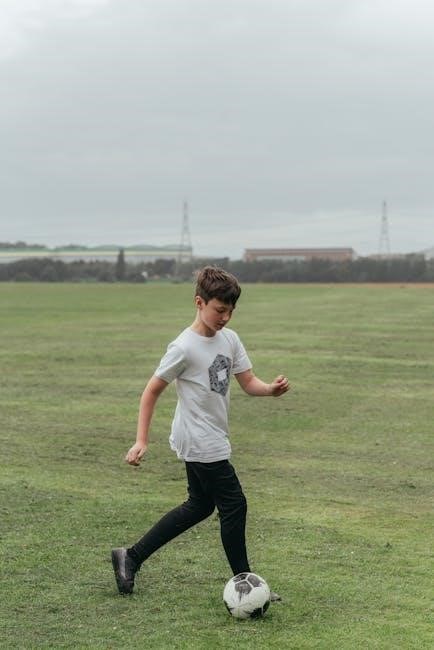
U6 soccer prioritizes foundational motor skill development, emphasizing running, hopping, skipping, and turning – all integrated into practice drills. The focus isn’t on complex tactics, but on comfort and confidence with the ball. PDF practice plans highlight maximizing ball touches, ensuring each player interacts frequently with the soccer ball to build control.
These plans acknowledge that U6 players tire quickly but recover rapidly, necessitating short, engaging activities. The curriculum centers around creating a fun, positive environment where children learn through play. Age-appropriate drills, detailed in available resources, build a love for the game while fostering essential physical literacy skills. The goal is to establish a strong base for future soccer development.